














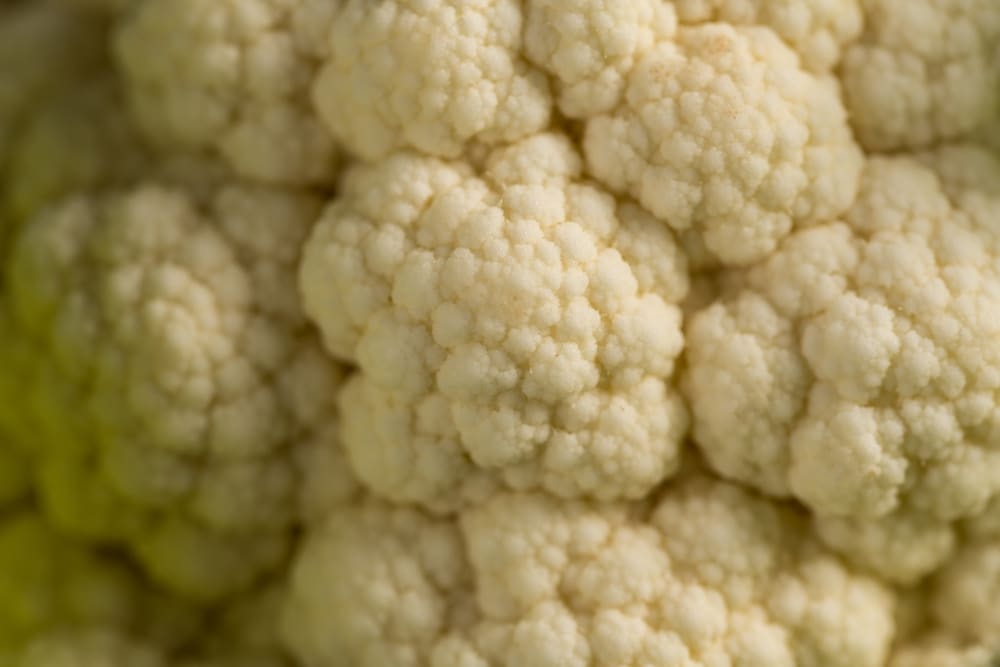
Cauliflower stands out as a nutritional powerhouse.
The health benefits it brings to the table are numerous, especially when integrated into a varied diet.
This cruciferous vegetable can greatly enhance your wellness journey.
1. Enjoy Increased Fiber Intake
Cauliflower delivers a healthy dose of dietary fiber, instrumental in slowing digestion.
This property not only aids in digestion but also ensures you stay satiated longer.
Adults require around 28 to 34 grams of fiber daily.
Surprisingly, only about 5% of people achieve the recommended intake.
Adding fiber-rich vegetables like cauliflower is a strategic method to enhance your daily fiber consumption.
2. Gain Antioxidant Advantages
Cauliflower, a member of the Brassica family, is packed with antioxidants.
These critical compounds play a vital role in shielding your body from damage inflicted by free radicals—unstable compounds that can wreak havoc on your health.
Research indicates that even the leaves of cauliflower, often discarded, possess significant antioxidant levels.
There are suggestions these unused parts could be explored for innovative food products.
3. Boost Your Metabolism
Choline, a key compound found in cauliflower, assists in metabolic processes.
Among vegetables, cauliflower ranks high in choline content.
Choline supports various functions in your body, including:
- Memory
- Mood regulation
- Muscle control
- Brain and nervous system functions
The recommended intake for adults hovers around 425–550 mg daily.
While this may seem daunting, choline is plentiful in many foods.
For instance, a single hard-boiled egg provides approximately 147 mg.
4. Access a Variety of Minerals
Cauliflower boasts an impressive mineral profile, including:
- Calcium: With 23 g per cup, cauliflower provides a calcium content comparable to half a cup of fresh kale.
- Magnesium: Essential for muscle and nerve function, magnesium also regulates blood glucose and blood pressure.Each cup of cauliflower contains about 16 mg, nearing the levels found in broccoli.
Adults require between 310-420 mg per day.
- Phosphorus: Found abundantly in bones, teeth, DNA, and RNA, adults need around 700-1,250 mg daily.Cauliflower stands out as one of the best vegetable sources of phosphorus.
- Potassium: Critical for normal cell function and fluid balance, a medium banana contains 422 mg while one cup of cauliflower holds 320 mg.
5. Lower Your Cancer Risk
The antioxidant sulforaphane found in cauliflower plays a pivotal role in reducing cancer risk.
This compound not only fights inflammation but also may exhibit anticancer effects.
Studies suggest that regular consumption of cruciferous vegetables, like cauliflower, contributes to cancer prevention by:
- Protecting cells from DNA damage
- Neutralizing carcinogenic substances
- Exhibiting antiviral and antibacterial properties
- Inducing cell death in harmful cells
- Inhibiting the movement of tumor cells
Nutritional Profile
One cup or 100 grams of raw, chopped cauliflower contains essential nutrients:
- Protein: 1.92 g
- Fat: 0.28 g
- Carbohydrates: 4.97 g
- Fiber: 2 g
- Calcium: 22 mg
- Iron: 0.42 mg
- Magnesium: 15 mg
- Phosphorus: 44 mg
- Potassium: 299 mg
- Sodium: 30 mg
- Zinc: 0.27 mg
- Manganese: 0.155 mg
- Vitamin C: 48.2 mg
- Vitamin B-6: 0.184 mg
- Folate: 57 mcg
Cauliflower is a nutritional superfood, offering a bounty of beneficial nutrients.
It’s a low-calorie food, with only 25 calories in one cup.
Who May Need to Limit Cauliflower Intake
Despite its various benefits, some individuals might face adverse effects from consuming excessive amounts of cauliflower.
- Individuals with irritable bowel syndrome: Due to its capacity to produce gas, those with gastrointestinal concerns might want to limit their cauliflower intake to assess tolerance.
- People on blood thinners: Those taking medications like warfarin may experience interactions with dietary vitamin K.The evidence remains unclear, so discussing dietary choices with a healthcare provider is advisable.
- Those with iodine deficiency: A high consumption of brassica vegetables, including cauliflower, may impede iodine absorption in individuals with iodine deficiency.While this might not be a concern for most, it’s worth noting.