














Many women receive a “normal” mammogram result and feel an immediate sense of relief. However, for those with dense breast tissue, that clean bill of health may only tell part of the story. Understanding why a mammogram might not be enough is the first step toward a more comprehensive and proactive approach to breast health.
The Diagnostic Challenges of Dense Breast Tissue
On a standard mammogram, both dense breast tissue and potential tumors appear as white. This creates a significant imaging hurdle because the tissue can effectively “mask” a tumor, making it nearly invisible to the radiologist. This is not a matter of equipment quality or technician skill; it is a fundamental limitation of X-ray physics when applied to specific tissue types.
Recent data indicates that approximately half of all women possess dense breasts. It is important to note that breast density is not something that can be identified through a physical touch or a self-exam. It is a clinical classification determined by a radiologist after reviewing imaging. Because dense tissue is composed of more fibrous and glandular tissue rather than fatty tissue, it increases the difficulty of obtaining a clear reading. Furthermore, women with high breast density may face a risk of developing breast cancer that is four to six times higher than those with lower density, making secondary screening methods like 3D ultrasound a vital tool for earlier detection.
How Ultrasound Enhances Diagnostic Accuracy
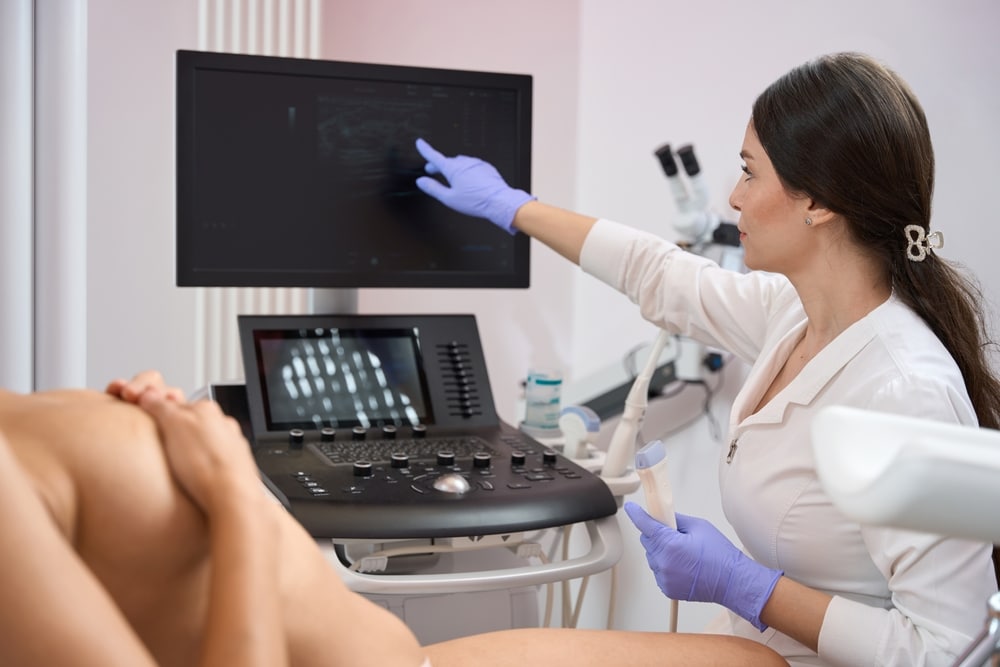
Unlike mammography, which utilizes X-rays, ultrasound technology relies on sound waves to create images of the breast. Because these two technologies interact with human tissue differently, ultrasound can often see through the “white-out” effect of dense tissue. This allows specialists to differentiate between benign, fluid-filled cysts and solid masses that require further investigation.
Clinical research suggests that adding a supplemental ultrasound to a screening routine can identify an additional three to four cancers for every 1,000 women screened—cases that may have been missed by mammography alone. Beyond detection rates, ultrasound offers the benefit of being a radiation-free procedure. It is also a dynamic exam; technicians can adjust angles and pressure in real-time to focus on areas of concern, providing a level of clarity that static X-rays cannot always match.
Determining If You Need Supplemental Screening
While mammograms remain the gold standard for foundational screening, certain individuals significantly benefit from the addition of an ultrasound. You should consider discussing supplemental imaging with your healthcare provider if you fall into any of the following categories:
- Your mammogram report explicitly mentions that you have dense breast tissue (Categories C or D).
- You have a personal history of breast cancer or a strong family history of the disease.
- You are in your 30s and are beginning a proactive screening regimen due to high-risk factors.
- You have undergone previous breast surgeries or biopsies, as scar tissue can further complicate mammogram interpretations.
Beyond clinical risk factors, ultrasound is an excellent tool for addressing diagnostic ambiguity. For women who frequently deal with “callbacks” or inconclusive results, the detailed imagery provided by an ultrasound can offer much-needed clarity and reduce the psychological stress associated with uncertain findings.
Integrating Ultrasound into Your Preventative Care Plan
A breast ultrasound is intended to complement a mammogram, not replace it. For maximum efficiency, many women choose to schedule both exams during the same appointment window. This “combined” approach ensures that the radiologist has two different data sets to compare, leading to a more confident diagnosis.
You do not necessarily need to wait for a specialist to suggest this; you can be your own advocate. During your annual check-up, ask your primary physician or OB-GYN about your breast density category. Knowing whether you fall into a high-density group allows you to have an informed conversation about whether supplemental 3D ultrasound or similar advanced imaging is appropriate for your specific health profile.
Understanding Coverage and Access
The cost and insurance coverage for dense breast ultrasounds can vary depending on your location and your specific provider. In several regions, insurance mandates—including those for Medicare—require coverage for supplemental screenings for women with documented dense tissue. However, in some cases, the exam may be categorized as “diagnostic” rather than “preventative,” which can change out-of-pocket costs.
Before your appointment, contact your insurance provider to clarify how they classify supplemental ultrasounds for dense breasts. Additionally, many imaging centers offer competitive self-pay rates for patients whose insurance may not fully cover the procedure. Staying informed about local legislation and facility pricing ensures that financial uncertainty doesn’t stand in the way of comprehensive care.
Conclusion: Achieving Greater Peace of Mind
Proactive breast health is about moving beyond a “one size fits all” screening model. For millions of women, a mammogram is only the first chapter of the story. By identifying your breast density category and adding a supplemental ultrasound when necessary, you provide your medical team with the tools they need to see the full picture. Taking this extra step transforms an annual routine into a robust defense, replacing lingering doubt with the confidence of a thorough evaluation.