














Key Takeaways
- A recent trial found that daily black cumin seed powder significantly reduced cholesterol, triglycerides, and LDL levels while increasing HDL levels.
- Lab studies indicate black cumin may slow the formation of fat cells, showing promise in reducing obesity risk, although further research is necessary.
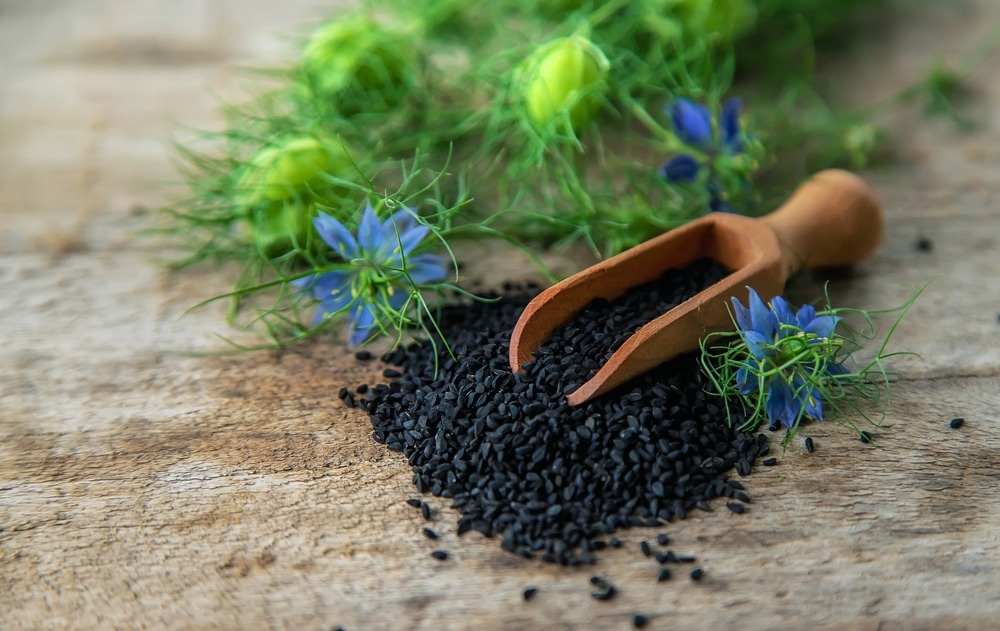
- Black cumin seeds can be consumed as a cooking spice or taken as a supplement.
Black cumin seeds have long been utilized in traditional medicine for ailments like menstrual pain, eczema, digestive troubles, and bronchitis.
Recent research suggests that these seeds can assist in lowering cholesterol and triglyceride levels while also diminishing obesity risk.
Study Identifies Metabolic Benefits of Black Cumin
A study published in the journal Food Science & Nutrition featured a randomized controlled trial with 42 participants, primarily between ages 20 and 50. Those who took a daily 5 g dose of black cumin seed powder over an eight-week period exhibited lower levels of cholesterol, triglycerides, and LDL (“bad”) cholesterol in addition to higher HDL (“good”) cholesterol levels.
In laboratory studies, researchers discovered that black cumin seeds can inhibit the formation of adipocytes, or fat cells, which may reduce the risk of obesity.
Collectively, the findings from lab studies and human data suggest that black cumin seeds present a “promising natural food for supporting metabolic health,” according to Akiko Kojima-Yuasa, PhD, a senior study author and associate professor at Osaka Metropolitan University, in an email to Verywell.
How Black Cumin Can Aid in Managing Obesity
Thymoquinone, the active compound in black cumin seeds, contributes to lowering oxidative stress and curbing the early stages of fat cell development, which may account for the seeds’ impact on obesity, explained Kojima-Yuasa.
Additionally, black cumin possesses anti-inflammatory properties, which may help counteract the chronic inflammation linked to obesity.
Nevertheless, more investigations are necessary regarding the efficacy of black cumin seeds.
“Patients should understand that while this is a promising start, further data is required for comprehensive insights into long-term benefits,” remarked Shiara Ortiz-Pujols, MD, MPH, director of obesity medicine at Staten Island University Hospital, who did not partake in the study, to Verywell.
The study had a limited participant pool of healthy individuals in Japan, and it remains unclear whether black cumin seeds would yield the same effects across diverse populations, Ortiz-Pujols noted.
Is Black Cumin Safe?
The safety profile of black cumin remains somewhat ambiguous, particularly concerning its side effects and potential interactions with specific medications.
“Because black cumin may amplify the effects of medications like antihypertensives, diabetes treatments, or anticoagulants, extra caution is advisable for patients on these drugs. It’s crucial to consult a qualified healthcare professional to monitor for interactions and adjust treatment when necessary,” advised Stephen Dahmer, MD, director at the University of Arizona Andrew Weil Center for Integrative Medicine, in an email to Verywell.
Some individuals have reported allergic reactions from topical applications of black cumin oil. Concerns also exist about possible kidney and liver damage, especially at higher doses.
“The quality of the product is important. Opt for brands that undergo third-party testing and remember that it works optimally as a component of a broader lifestyle that includes nutritious food, restorative sleep, regular movement, and stress management,” Dahmer added.
How to Incorporate Black Cumin Seeds into Your Diet
For those interested in adding black cumin to their diet, it is available in both cooking spice form and supplement capsules. Historically, this spice has been used in India and the Middle East to add flavor to curries, vegetables, lentils, breads, and pickles.
Generally, most people can incorporate black cumin seeds into their meals without significant side effects.
Iman Majd, MD, MS, associate professor of family medicine and director of the Osher Center for Integrative Health at the University of Washington, recommends using approximately 1/2 teaspoon of black cumin seeds daily in your meals.
Alternatively, one could consume 500 mg to 1000 mg of black cumin seed oil capsules once or twice each day with meals, he stated.
Some studies associated a daily 500 mg dosage with improved cognition, mood, and symptoms of rheumatoid arthritis. A 2020 study indicated that a 1000 mg daily intake helped lower fasting blood glucose, LDL cholesterol, and triglycerides in individuals with type 2 diabetes.
“Black cumin seeds serve as a beneficial addition for managing weight, blood sugar levels, and overall heart health. They should not replace a balanced diet, exercise, or prescribed medications, but rather support your health journey,” Majd concluded.