















I was on the acupuncture table, lying there with my face up, when my doctor pressed down on the sides of my stomach. “Oh wow,” he said, eyebrows raised. “You’re holding a lot of grief.” At first, I felt a flicker of confusion. I mean, how could he tell? I wasn’t sad—I hadn’t shed a single tear in ages. A new relationship was blossoming, a job I genuinely loved had just started, and I was on the hunt for an apartment—life felt bright, even amid the pandemic chaos.
Sure, I’d made a big move—packing everything up from my cozy Los Angeles one-bedroom and relocating back to New York, all to support my 98-year-old grandfather who wasn’t well. There was definitely some culture shock involved, going from the freedom of LA and spending every second with family. And yeah, diving back into the dating pool after a nearly 10-year relationship was a change, to say the least. But I felt like I had adjusted, like I was handling things just fine.
“Grief is stored in the stomach,” my doctor elaborated. I nodded, trying to mask my skepticism while it buzzed loudly in my mind. I’m all about exploring wellness—sure, I swear by acupuncture, green powders, and hot yoga (bonus points if there’s a killer playlist). But claiming my body was harboring grief felt a bit far-fetched. Yet, two hours later, I found myself in my boyfriend’s apartment, gulping for breath between sobs.
My body used to be my means of storytelling—the medium through which I expressed emotions I couldn’t articulate. From the age of five, I was enveloped in the world of ballet, spending countless hours embracing dance. I understood how my body could remember feelings and experiences that my mind might forget. But through the years, something changed. I lost that trust, that intimate connection with my physical self. It felt like a void had formed. Thankfully, somatic yoga helped me mend that disconnect.
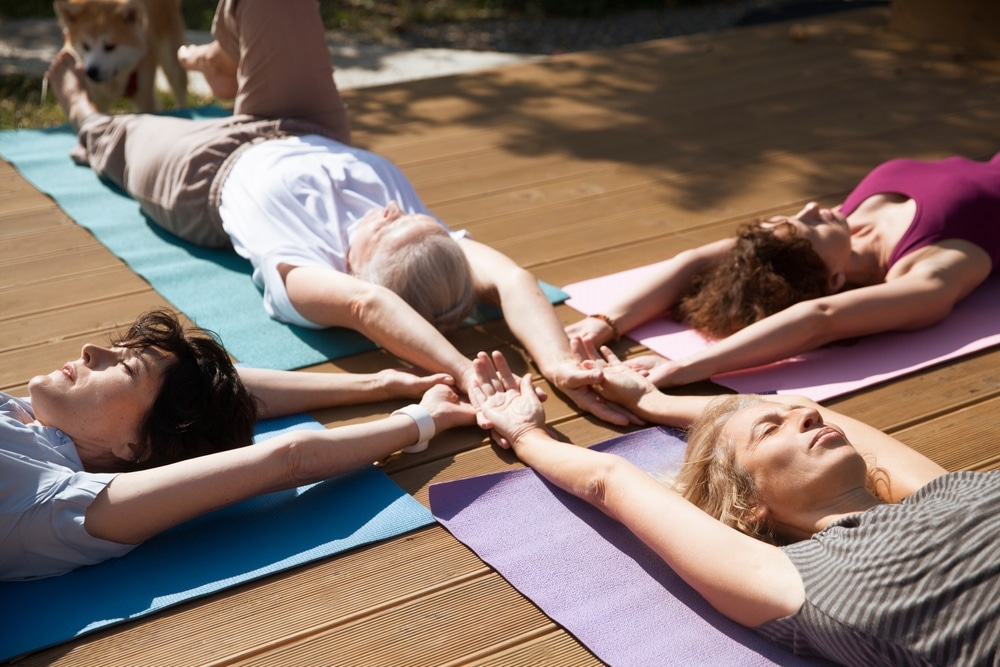
So, what exactly is somatic yoga? Well, it’s gaining traction these days. The term “somatic” relates to our bodies, emphasizing our physical presence distinct from our mental states. Somatic yoga flows incorporate poses most of us are familiar with—child’s pose, happy baby pose, and so on—while focusing on tuning into what’s happening within our bodies and minds. In essence, all yoga holds some somatic elements.
According to Lisa Tatham Flynn, a certified teacher in Hann Somatic Education and trauma-informed yoga therapy, the heart of somatic yoga lies in being present. “We’re practicing holding our attention on what we’re doing throughout the entire practice,” she explained. “It’s a first-person, internal, lived-experience practice.”
When January rolled around and my mother called early that morning with the news of my grandfather’s passing, I felt like I was in a hazy fog. I tried to get up from bed, but my entire body felt heavy as if lead was weighing me down. Pain shot through my lower back and radiated down my leg—I felt utterly helpless. Crawling to the floor, I sat there, numb and confused. “It’s grief,” a close family friend later said. “Grief is stored in the body.” Naturally, I dismissed their words. I thought it was my back complaining after a week of awkward sleeping and lifting my grandfather too often. Surely, it would heal with time.
But for an entire month, I limped around, gritting my teeth whenever I moved wrong, and ignored my sisters’ constant suggestions to see a doctor. The physical agony distracted me from the profound heartache that consumed me—losing my confidant, my dearest friend. My heart internally ached with grief that wouldn’t let up, and I was desperate for a break.
My grief was like an unwelcome shadow, a constant reminder that sat heavy on my shoulders. My therapist urged me to explore gentle movements and mindful breathing. Finally, during one sleepless night, I made the leap and searched “emotional release yoga” on YouTube. That’s when I stumbled upon a 20-minute hip-opening session led by yoga teacher Caitlin K’eli, E-RYT 500. I propped my iPad beside my bed and hesitated, thinking, *This probably won’t work.* But there I was, 18 minutes in, in happy baby pose—the tears escaped, pooling on my sheets.
“Angry people live in angry bodies,” Bessel van der Kolk writes in his groundbreaking book, *The Body Keeps the Score.* “Physical self-awareness is the first step in releasing the tyranny of the past.” The first time I cried in a yoga class was back in 2015 during Savasana at an early morning Hot8 Yoga Barre session in Santa Monica. But the videos created by K’eli helped me appreciate the beauty of slow, melodic movement rather than fast-paced sessions that felt more like a workout than a release. This was about stretching, gentleness, and being mindful of my breath—the art of letting go.
K’eli’s videos are like hugs for the soul, varying from 10 to 30 minutes long. I started practicing them in bed, still in my pajamas, because that’s literally all I could manage. Gradually, I began to pull out my yoga mat whenever I felt stronger. Little by little, I’m reconnecting with my body. Trust is rebuilding, and I’m learning to listen. Often, the release comes at the end of each session, and what surfaces can feel unexpected—sometimes it’s a realization, other times an emotional epiphany. Just a few sessions ago, I pressed play intending to ease the heavy burden of grief, and instead, I found myself overflowing with love for my boyfriend.
“The greatest sources of our suffering are the lies we tell ourselves,” van der Kolk wisely notes. *I’m fine,* even when I’m not. *I’m over it,* even when I’m still immersed in it. *That doesn’t hurt,* when it truly does. Experiencing emotional release through yoga is like stepping into a realm of unapologetic honesty. It’s a gift we can give ourselves—a profound act of courage that brings liberation. All that’s required is a willingness to embrace our truth and set ourselves free.