














Key Takeaways
- Including isometric exercises like planks or wall sits can significantly help lower blood pressure more than other workout types.
- Such static moves are simple to perform at home, requiring no special equipment or extended workout sessions.
- Experts advocate for a blend of isometric exercises with aerobic and resistance training for optimal blood pressure management.
You can improve your blood pressure without extensive movement. A recent meta-analysis revealed that engaging in static isometric workouts—where you contract muscles without changing joint position—may be more beneficial in lowering blood pressure compared to other exercise forms.
However, it’s vital to note that aerobic exercises, resistance training, and high-intensity workouts are still crucial for heart health.
What Are Isometric Exercises?
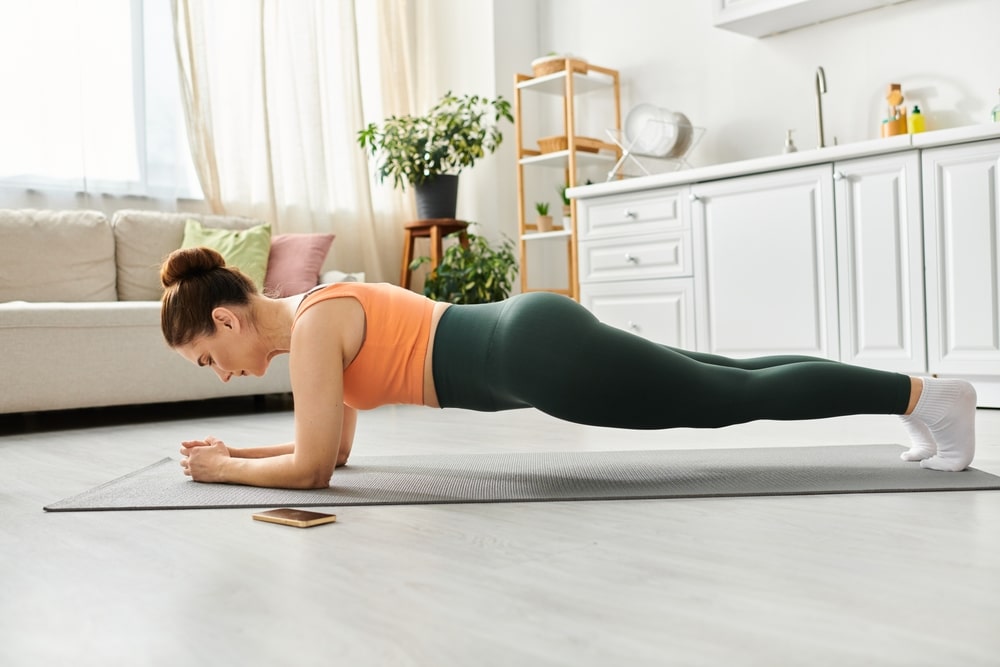
Isometric exercises involve muscle contractions without joint movement. Examples include planks, wall sits, or gripping a handgrip. Such static holds generate tension that strengthens muscles and improves blood vessels’ responses to pressure changes.
“Isometric exercise training is a promising approach for decreasing resting blood pressure and serves as a complement to traditional exercise forms—not as a replacement,” stated Jamie O’Driscoll, PhD, an associate professor of lifestyle medicine at the University of Leicester and co-author of the 2023 meta-analysis.
How They Help With Blood Pressure
While the exact mechanisms are not fully understood, isometric exercises are thought to aid the heart in pumping blood more efficiently and can help decrease heart rate over time.
Exercise of any kind is known to lower both systolic and diastolic blood pressure. However, isometric training is particularly notable for its ease and accessibility. Research indicates that three to four sets of two-minute isometric holds with brief rest periods can lead to significant blood pressure reductions.
How to Add Isometric Training to Your Routine
Current recommendations for managing high blood pressure emphasize regular physical activity. The American Heart Association suggests at least 150 minutes of moderate-intensity aerobic activity each week (or 75 minutes of vigorous activity).
The updated guidelines now recommend mixing aerobic exercise with resistance training, incorporating both dynamic and isometric movements—like planks or wall sits—to effectively lower blood pressure. If you regularly jog or cycle, consider integrating short planks into your regimen.
“The broader literature consistently highlights the positive effect of engaging in any amount of physical activity on health,” O’Driscoll noted. “From a public health standpoint, any effort is worthwhile. A little activity is definitely better than none.”