















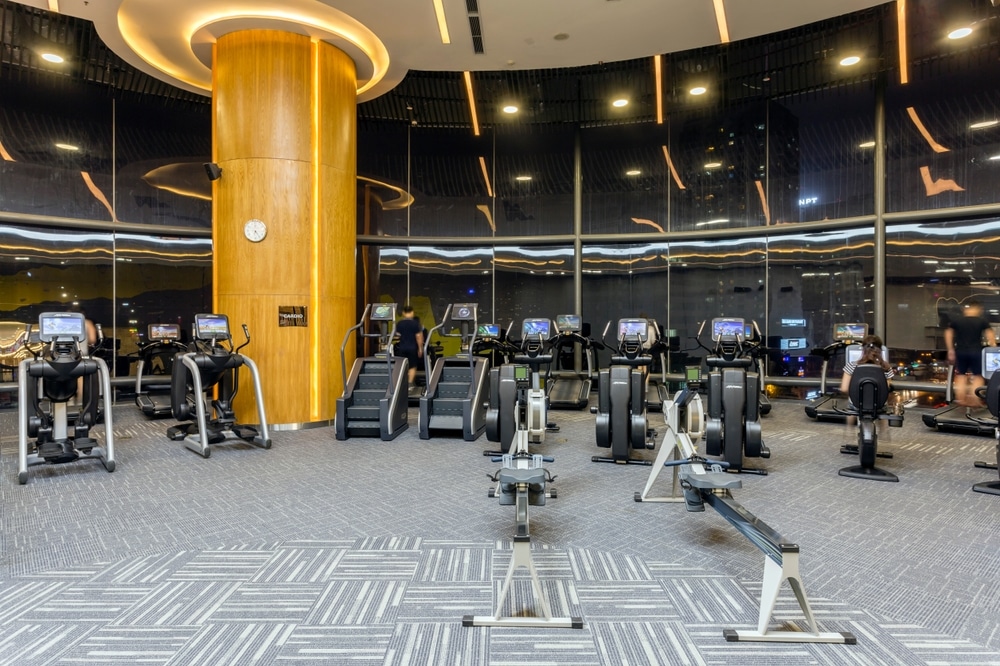
Your training regime is solid, yet the gym where you’re putting in the effort might not be serving your long-term health goals. Typically, these facilities focus on heavy lifting and maximizing daily traffic, which may not support the sustainability you need.
High-end fitness centers are shifting the conversation. They respond to the growing consumer demand for holistic health solutions. A 2025 survey shows that 60% of Americans list longevity and healthy aging as leading fitness motivators. While muscle building plays a crucial role in this equation, the importance of a comprehensive recovery strategy cannot be overlooked for optimal health outcomes.
“Building and maintaining lean muscle mass is among the most significant actions for long-term health, impacting bone density, injury prevention, metabolic function, and overall quality of life well into older years,” shares Brian Mazza, VP at Life Time in an interview with Muscle & Fitness. He continues to emphasize a shift in mindset, noting that “people are increasingly realizing they must pace themselves to achieve greater results and longevity.”
These well-structured facilities are attracting clients who align their health strategy with focused training plans, supported by data and a committed team.
A Player at Scale
Life Time has effectively scaled this ideology, with the market acknowledging its value. In 2025, the company reported nearly $3 billion in revenue, and average revenue per member increased by 10.7% within a single quarter. This growth indicates a deeper engagement with available services, reflected in record retention rates. Looking ahead, Life Time is set to launch 14 new athletic country clubs in 2026, each featuring recovery areas, saunas, cold plunge zones, and co-ed wellness suites.
At the core of this expansion is Miora, Life Time’s longevity center concept that debuted in 2023. This concept integrates hormone optimization, GLP-1 support, peptides, and red light therapy alongside workout areas, although not every location offers these options yet.
Mazza points out a transformation in the typical member profile compared to five years ago. Members are now more informed and demanding greater value from their fitness experience.
“The messaging, programming, classes, and atmosphere of our facilities focus on the long-term,” he states. For Mazza, Life Time is more than just a gym; it’s a community. “I want to establish roots here, grow, and involve my family.”
Life Time isn’t alone in this expansion. Equinox enhances its offerings in regenerative facilities and longevity programming, while smaller boutique gyms are also emerging, highlighting the trend towards holistic health integration across premium fitness markets.
Why Premium Gyms Are Replacing Traditional Fitness Models
If you favor an intimate atmosphere with less crowding, boutique facilities are adopting a similar holistic approach. In Scottsdale, Hive combines performance training with recovery and functional health services. In Los Angeles, Love Life integrates longevity and preventive care within its training settings.
These facilities maintain smaller member caps, ensuring closer relationships between trainers, doctors, and physical therapists that larger venues may struggle to match. At Monarch Athletic Club in California (soon to open in Florida), memberships encompass personal training, physical therapy, preventive medicine, nutrition, and various longevity services.
Dr. Ryan Greene, co-founder and medical director at Monarch Athletic Club, highlights his approach after observing deficiencies in traditional healthcare and fitness frameworks that focus solely on treatment rather than prevention.
“I proposed the concept to Mayo Clinic,” Greene recounts from his time as a clinical research fellow there. “They appreciated it but noted that preventive medicine lacks financial backing.”
After his move to Southern California, Greene opened Monarch Athletic Club in January 2020. The need for such integrated services has only grown since then.
Today’s clientele arrives at facilities like Monarch armed with data from wearables, personal bloodwork, and supplement insights gleaned from social media.
“Measuring data without actionable steps is not beneficial,” Greene cautions. “While gathering data is useful, individuals often struggle to interpret it and devise a plan.”
However, when specialists in medicine, nutrition, training, physical therapy, and mental health collaborate on an individual’s health metrics, tangible results follow.
Greene recently examined five years of data to assess Monarch’s effectiveness. He discovered that members showed increased lean muscle, improved body composition, reduced body fat, higher HDL levels, a 30% dip in inflammation markers, and decreased triglycerides.
This cohesive strategy is vital for achieving meaningful progress. Greene asserts, “A holistic method that integrates medicine, movement, rehab, and nutrition defines optimal human function.”
The Real Cost of Premium Fitness Memberships
Membership costs vary by model and location. Life Time ranges from $199 to $379 monthly, depending on location. The Miora experience begins with a $299 intake package that covers bloodwork, a Metabolic Code analysis, and a consultation. The ongoing membership is $199 monthly and includes therapies like red light, cryotherapy, infrared saunas, and access to a hyperbaric chamber.
Equinox operates between $205 and $395, based on location and membership tier. Its new longevity program, developed in collaboration with Function Health, is priced at $3,000 monthly for a minimum of six months, excluding the standard gym fee, leading to annual commitments exceeding $40,000.
In Scottsdale, AZ, Hive begins at $299 monthly, including gym access and unlimited use of cold plunge, sauna, and compression, while offerings escalate to $899 for premium options. Love Life provides plans ranging from $350, which includes fitness and recovery services, to $2,200, covering comprehensive integrative medicine. Monarch fees start at $380 and can go up to $2,200 for all-inclusive options that encompass numerous services.
Is a Longevity-Focused Gym Worth the Investment?
Choosing a premium facility is an important decision that shouldn’t be made lightly. Discounts on these memberships are rare, so consider a thoughtful budgeting plan instead.
If you’re already investing in separate services such as personal training, bloodwork, functional medicine consultations, VO₂ max tests, body composition analyses, and recovery lounge memberships on top of standard gym fees, you may find the costs accumulating quickly.
This fragmentation may incur costs that extend beyond finances. Disconnects in cooperation can occur between the individual creating your training plan, the one managing injuries, and the nutritional expert analyzing your food intake to the physician interpreting lab results.
“You should be an authority on your health,” Greene insists. “In seeking expert assistance for medical needs, having that support within your fitness community enables seamless collaboration. I’m available at your gym, allowing us to make informed decisions together.”